
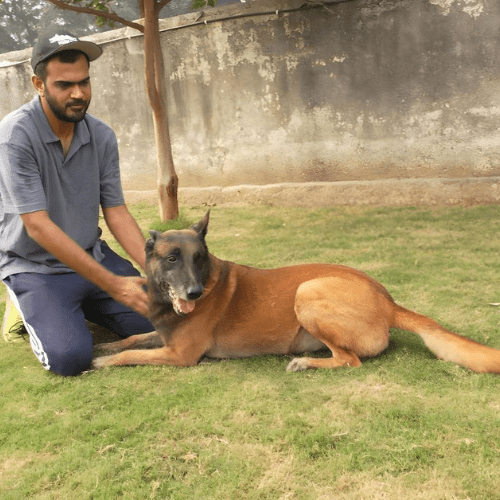
Most People Get Dog Training Wrong
Most people think dog training is about teaching commands.
In reality, it’s about understanding behaviour, communication, and psychology.
That’s exactly why many aspiring trainers struggle – they learn techniques, but not systems.
And without a system, training becomes inconsistent, confusing, and ineffective.
Why Dog Training Is a Growing Career Opportunity
The demand for professional dog trainers in India is rising rapidly. With more families adopting dogs, the need for structured behaviour training, obedience, and socialisation has increased.
But here’s what most people miss:
The real opportunity is not just in demand – it’s in the gap.
There’s a growing difference between trainers who simply follow methods and those who truly understand behaviour.
And that gap is where skilled professionals stand out.
What Makes K9 School Different: Introducing CRP
At K9 School, we don’t just teach training – we teach a system.
We use CRP (Communication, Relationship, and Psychology) – India’s first structured dog training system designed for real-world environments, not just controlled setups.
CRP focuses on:
- Communication – How dogs understand signals and cues
- Relationship – The trust between dog and handler
- Psychology – The root cause behind behaviour
This approach allows trainers to go beyond commands and actually solve behaviour problems.
A Real Story That Built a System
The journey of founder Adnaan Khan wasn’t just about passion, it became the foundation of a structured method.
When he adopted his first dog, Homer, it wasn’t just companionship, it was the beginning of deep behavioural understanding.
What started as personal learning evolved into a system that now works across hundreds of dogs, breeds, and behavioural challenges.
This is what separates experience from expertise, turning learning into a repeatable framework.
Step-by-Step Guide to Becoming a Dog Trainer
Becoming a professional dog trainer is not about rushing, it’s about building real capability.
1. Build a Strong Foundation
Most beginners focus on commands.
Professionals focus on behaviour patterns and communication.
Start by understanding body language, instincts, and how dogs perceive their environment.
2. Choose Structured Learning
A professional trainer needs direction, not random information.
A well-designed course helps you understand not just what to do, but why it works.
3. Get Real-World Experience
This is where theory becomes skill.
Working with different dogs separates knowledge from expertise. No two dogs behave the same, and that’s where real learning happens.
Exposure to aggression, anxiety, and high-energy dogs builds true confidence.
4. Understand a System, Not Just Techniques
Without a structured philosophy, trainers rely on guesswork.
Understanding a system creates consistency across cases – no matter the breed or behaviour.
This is where most trainers fail – and professionals stand apart.
5. Start Small and Grow
Every dog you work with adds to your experience.
Over time, you don’t just train dogs – you start understanding patterns, predicting behaviour, and solving problems faster.
What Most Dog Training Courses Get Wrong
Many courses focus heavily on techniques and certifications but ignore real-world application.
As a result:
- Trainers struggle with aggressive dogs
- Anxiety cases become difficult to handle
- Complex behaviour feels overwhelming
Without a system, knowledge doesn’t translate into results.
The Right Training Philosophy
Training is not about control – it’s about clarity.
Dogs respond to:
- Consistent communication
- Structured environments
- Clear expectations
Without these, even the best techniques fail.
Skills That Define a Great Trainer
A great trainer doesn’t just act – they think.
They:
- Observe before reacting
- Understand before correcting
- Adapt instead of applying fixed methods
This ability to read situations is what turns a beginner into a professional.
Why Choose K9 School
What sets K9 School apart is not just training, it’s the way we develop thinking.
We don’t just teach what to do.
We teach how to think about behaviour.
Through CRP, you learn to:
- Diagnose behaviour
- Communicate effectively
- Apply structured solutions across different cases
This prepares you for real-world challenges, not just controlled environments.
Final Thoughts
Becoming a dog trainer is not about certification – it’s about capability.
When you understand behaviour at a deeper level, you don’t just train dogs, you solve problems.
And that’s what defines a true professional.
FAQs
1. How long does it take to become a dog trainer?
It can take a few months to a year, depending on how much practical experience you gain alongside learning.
2. Can I start learning dog training from home?
Yes, you can begin with basic concepts, but real growth comes from working with dogs in different situations.
3. Is dog training a good career in India?
Yes, with increasing pet ownership, it is a growing and rewarding profession with strong long-term potential.
4. Do I need certification to become a trainer?
Certification helps, but real-world skill and understanding behaviour matter far more.
5. What makes someone a professional dog trainer?
The ability to understand behaviour, adapt to different dogs, and apply structured solutions consistently.